Caregiving
My Dad Has Dementia and Still Loves Sudoku. How Can We Play Together?
A familiar puzzle can be a good way to spend time together. Here’s how to offer company, follow your parent’s lead and recognize when they would rather do something else.

Your dad settles into his usual chair, opens the puzzle page and fills in a square you were still puzzling over. Earlier that morning he asked twice what time you were leaving. It can be hard to make sense of those two moments together.
Solving a familiar puzzle tells you what he could do on that occasion. It can’t tell you the stage of his dementia. It also tells you something immediately useful: he chose the puzzle. If he wants company, you have a way to spend a few minutes doing something he enjoys. The Alzheimer’s Association recommends starting with the person’s interests and adapting activities to their abilities. Choosing activities together.
How do I join in without taking over?
Start with the question you might have asked before his diagnosis: “Mind if I sit with you?” He might pass you the pencil, ask for help with a particular square or carry on without looking up. Sitting beside him can be the whole activity. If he’s concentrating, you needn’t keep up a conversation.
If he points to an empty square, try “Want me to read the row, or would you like the pencil?” Give him time to decide. If he spots the missing number first, let him show you how he saw it. If he asks what goes there, it’s fine to offer the answer. Having someone ask “Are you sure?” after every move can make a pleasant ritual feel like an exam.
What would one shared turn look like?
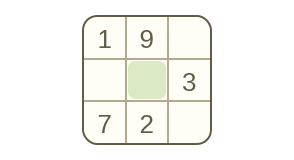
If he already likes Sudoku and wants to use a screen, BrainMinis has an untimed 4 × 4 board. The digits are 1 through 4. Imagine one row reads 1, 2, blank, 4. You might say, “I see one empty space. Shall we look at that one together?” The missing digit is 3. If the column and its small 2 × 2 box allow it, he can enter the 3, or you can enter it for him if he asks.
Let him decide whether there’s a next square. A partly filled board is a perfectly good place to leave it. If the print puzzle he knows is easier to see or handle, use that. If he would rather hear the song on the radio, close the puzzle and listen with him. None of those choices needs a score.
What if today feels different?
Perhaps today he pushes the sheet away after one look. Put it aside. If he asks again later whether you brought the puzzle, answer the question he’s asking now. A calm “Yes, it’s right here” gives him what he needs without asking him to recall the earlier exchange. Alzheimer’s Association guidance on repeated questions.
If you’re concerned about changes in daily life, bring a specific example to his care team, including when it started and what help he needed. That gives you more to discuss than a count of squares finished. If someone suddenly becomes confused, seek emergency medical help immediately. NHS guidance on sudden confusion.