Adult attention
Can Focus Games Help Me Pay Attention in Meetings?
Finding the next number on a grid and catching the next decision in a meeting make different demands. Try a practical way to notice where you lose the thread.

Two colleagues have been discussing a deadline for five minutes. You hear someone say “Thursday,” glance down to write it, and look up just in time to hear “Actually, let’s go with the other one.” You’ve lost the decision. Yet last night you followed a whole grid of numbers without missing a single one. Why was the meeting harder?
Finishing a focus game shows that you could follow that game’s target. A faster score alone can’t tell you whether you’ll catch more of a meeting. In the meeting, several things compete for the same moment: hearing the next speaker, deciding which words matter and writing down the part you already heard.
What exactly are you practicing on the grid?
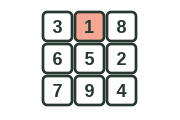
In the Schulte Table (Grid) Mini on BrainMinis, the numbers are scattered across a board. On a 5 × 5 grid you look for 1, then 2, all the way to 25. Selecting 1 starts the clock. Finding the last number stops it. You always know what to look for next, and a wrong selection leaves the target unchanged.
Suppose you spot 11 while you’re reaching for 10. You keep its location in mind and select it a moment later. That is a concrete strategy you can try again. Compare times on the same grid size if you want to see how the search went. The person chairing a meeting rarely signals that the next important point will be “number 11.”
Do gains on one task travel to another?
A review of brain-training research found substantial evidence of improvement on practiced tasks, less evidence on closely related tasks, and little evidence for improvements on distant tasks or everyday activities. That distinction matters if work is the reason you picked up the game. To answer “Did I follow the meeting more easily?” you need something you can observe in a meeting. Simons and colleagues’ review of transfer.
Try one change in the meeting itself
Think about the last detail you lost. If you missed a decision while copying a long explanation, try leaving a line in your notes for just the decision and who owns it. If two dates went by and you couldn’t tell which one stuck, ask while the topic is still open: “Did we settle on Thursday for the draft, or for the final version?” These are different problems, and they call for different fixes.
Afterward, compare that one line with the agreed action or the meeting notes. Perhaps you caught the date but missed who was sending the draft. That tells you what to listen for next time. You can do this whether or not you ever play another round.
When is it worth asking for help?
Losing your place during one long discussion gives you very little to go on. If the difficulty keeps getting in the way across settings, write down concrete examples, including how long it has been happening, and discuss them with a healthcare professional. An online game score cannot diagnose or rule out ADHD. An adult assessment considers the history of symptoms and how they affect daily life. NIMH guide to ADHD in adults.