How Long Should a Family Brain Game Session Last?
Try one puzzle or one turn each. Here’s how to choose a stopping point your child can picture and what to say when they ask for one more round.

Before you unfold the first slip, agree on whose turn will end the game. One turn each gives both of you a chance to set a puzzle and to guess. Even if dinner comes early, you’ll know whose turn to save.
The tricky part usually comes a minute into the game. Your child misses a number, knows exactly what they want to try differently, and dinner is almost ready. Does a retry count as another turn? It helps to settle that small question while everyone is still looking forward to playing.
Choose an ending your child can see
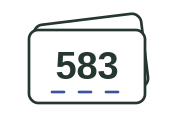
Suppose you have a few minutes while the rice cooks. Take two slips of paper. On yours, write a three-digit code for your child to remember. Let them write a secret code on theirs. Then say, “You get to crack my code, and I get to crack yours. When both slips are face up, we’re done.”
Let your child decide who goes first. Show the first code, cover it, and give the other person a guess. If you both like second guesses, agree that each player gets one peek.
When the turn ends, leave that slip face up. Even a child who has little idea how long five minutes feels can see that there’s one folded slip left.
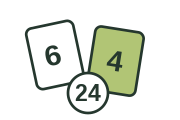
A shared puzzle needs a different ending. Suppose you’re playing Make 24 with 2, 3, 4 and 6. Dinner is ready just as your child notices that 2 × 6 makes 12. Write the four numbers and that first step on a slip. At breakfast they can pick up their idea and look for a way to make the other 12. You can put the screen away while the puzzle is still interesting.
When the best stopping point comes early
Imagine your child reads 4, 1, 6 correctly, flips over the slip, and wanders off to see what’s cooking. You still have three minutes. Your own code is waiting.
You can leave it folded. “I’ll save yours so you can test me after dinner” keeps the part your child made for you. If they forget about it, the game still had a perfectly good ending. There’s no need to fill the time you set aside.
Sometimes the clue is quieter. Your child keeps pushing the pencil toward you and asking you to take their turn. One question is enough: “Would you like to watch me try this one, or shall we put it away?” Either answer tells you more about tonight’s game than the clock does.
What to say when they ask for one more round
First, listen for what they wanted to do with that extra turn. “One more” might mean “I want to beat that score.” It might also mean “I spent ages making a code and you haven’t tried mine yet.” If you promised them a turn as puzzle maker, that’s worth remembering.
If you have to stop, keep the answer short and specific: “I want to try your code. Fold it up so I can’t see it, and put it by my breakfast bowl.” The code stays secret, dinner stays on time, and tomorrow’s game already has a first move.
If you genuinely have time for another round, say what you’re agreeing to before it starts: “Yes, I can guess one more code while the rice rests. You get to choose it.” That gives this particular evening an ending everyone understands.
If you’re wondering whether to set aside the same number of minutes every day, read what the research says about daily playtime.