How to Choose a Short Brain Game for a Child With ADHD
How long should you play, and which game should you choose? Try three short activities for memory, timing, and problem-solving, with a simple way to end each one.

Some afternoons, your child might happily spend ten minutes inventing a number puzzle for you. On another day, one turn is plenty. If you’re choosing a brain game for a child with ADHD, a good first question is one your child can answer: “Would you like to remember a secret code, catch a signal, or give me a puzzle to solve?”
Those three invitations work for a round on Brain Minis or a game at the kitchen table. Here’s how to pick one, how long to try it, and what to say when a round gets tricky.
How many minutes should we play?
For a first try, set aside about five minutes, with room to finish sooner. That’s a practical starting point for a family activity. It carries no medical significance, and there’s no need to play every day or make up missed sessions.
Before opening a game, agree on an ending your child can picture. “You make a code for me, then I’ll make one for you” is easier to follow than “We’ll stop in a little while.” If you have a firm time limit, say what comes next: “We have five minutes before dinner. When the timer rings, we’ll put the tablet away and choose the music.”
If your child likes secrets, try a memory game
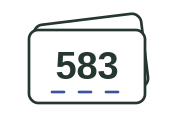
Write 4 0 7 3 on a piece of paper and call it the code to an imaginary treasure chest. Let your child look, cover it, then invite them to tell you the code. On the next turn, hand over the pencil. Children often have strong opinions about which four digits will fool a grown-up.
Suppose your child says 4 0 3 7. Before revealing the paper, ask, “Which part would you keep if you had one more guess?” They might be sure about the first two digits. Uncover just those two and let them decide whether to try the ending again or give you a code of their own.
This game gives you a chance to notice how your child remembers a sequence. Some children say each digit aloud. Others hear two pairs.
If your child enjoys the reveal, Number Memory on BrainMinis offers another round without either of you having to invent the code.
If your child likes a clear signal, try a reaction game
Rest your fingertips on a coin. Ask your child to tap the table when the coin leaves its surface. Wait a moment, then lift it. Switch roles and let your child decide how long to keep you waiting.
An early tap can lead to the best conversation of the round. Try asking, “What did you see move first?” Your child may have noticed your wrist lifting before the coin moved. Give them the coin and see whether you can spot the same clue when it’s your turn.
For a screen version, Quick Reaction asks the player to wait for green before pressing. If comparing times takes the fun out of it, give yourselves a different finish line: each person gets one turn to describe the instant they decided to press.
If your child enjoys figuring things out, try a number puzzle
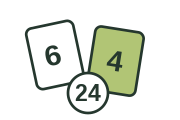
Write 2, 3, 4, and 7 on four slips. The challenge is to use each number once to make 24. You can add, subtract, multiply, or divide. Leave the slips on the table so your child can move them around and put them back when an idea stalls.
If they ask for help, offer one choice: “Would you like a hint, or would you like me to try an idea while you watch?” For a hint, set the 4 aside and ask, “If our last move is four times something, what number do we need?” Once they have 6 in mind, give them time with the remaining slips.
One solution is 3 − 2 = 1, then 7 − 1 = 6, and finally 4 × 6 = 24. A child who spots only the first step can still hand you the 1 and say, “Your turn.” If making a number together was the part they liked, try a fresh puzzle in Make 24.
What can a game tell me about my child’s attention?
It can tell you something specific about today. Perhaps your child liked making the secret code more than recalling it. Perhaps the reaction game became more enjoyable when you stopped comparing times. Those observations are useful the next time you choose something to play together.
A game score can’t tell you whether ADHD symptoms are improving at school or at home. If that’s the question on your mind, bring a concrete example from daily life to your child’s healthcare professional. The CDC describes treatments including behavior therapy and medication. The activities here are choices for family play. CDC guidance on ADHD treatment.
When your agreed turn is over, try ending with “Which part would you pick again?” If the answer is “making the code for you,” let your child tuck a new code into an envelope for tomorrow. You already know who gets the first turn.